
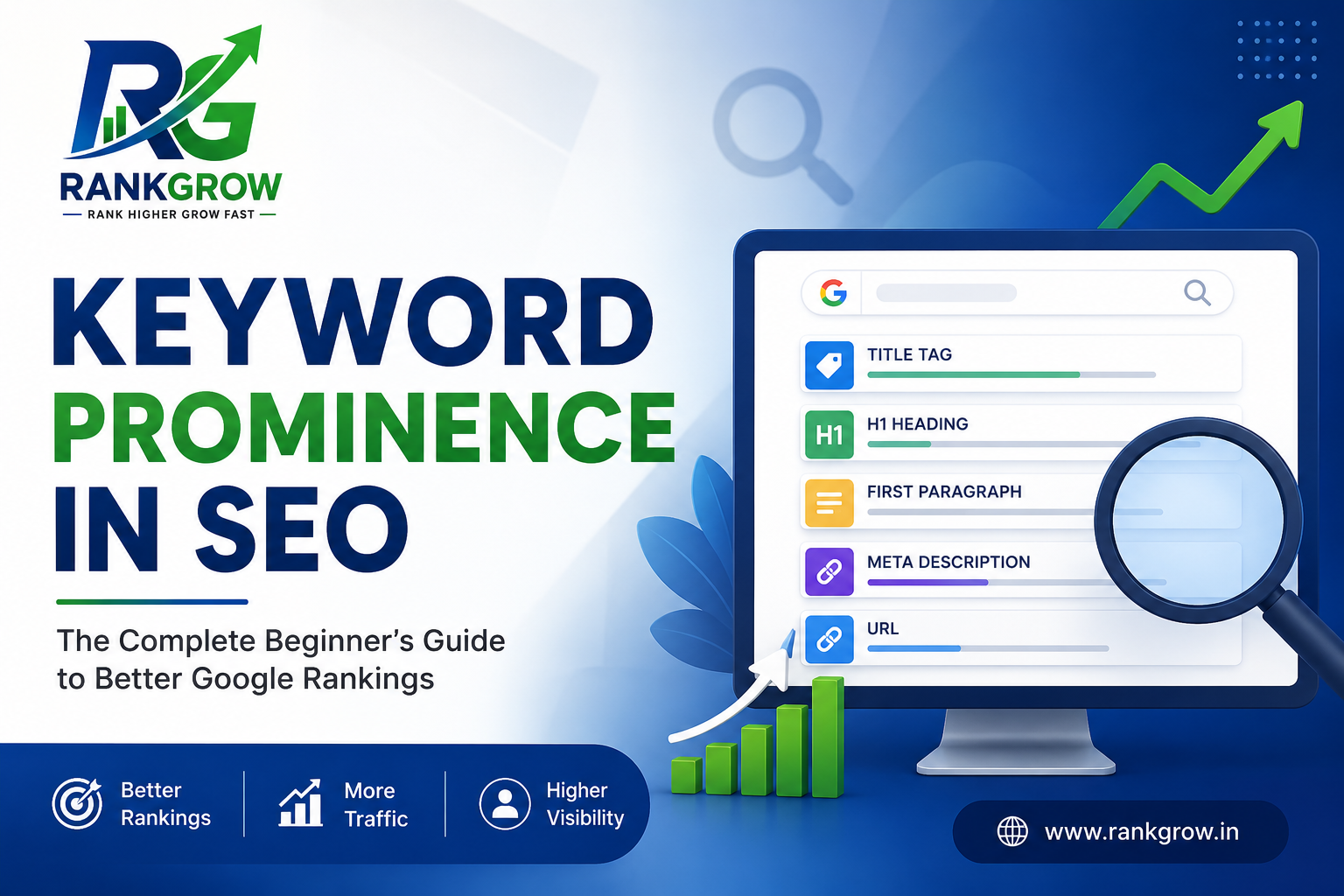
If you’ve ever wondered why some web pages rank on the first page of Google while others don’t, keyword prominence is one of the important factors you should understand.
Although modern search engines use AI, Natural Language Processing (NLP), and hundreds of ranking signals, placing your primary keyword strategically still helps Google understand your content faster.
The good news?
You don’t need to stuff keywords everywhere. Instead, you simply need to place them in the right locations naturally.
In this complete guide, you’ll learn everything about keyword prominence in SEO, including how it works, where to place keywords, common mistakes, optimization tips, and practical examples.
Table of Contents
What Is Keyword Prominence in SEO ?
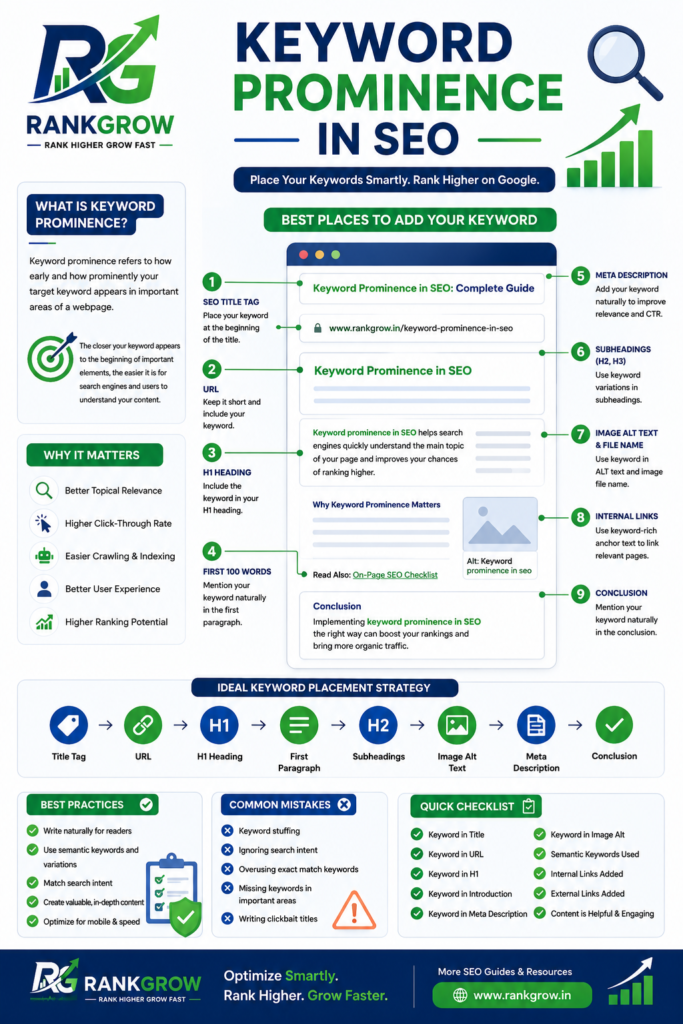
Keyword prominence refers to how early and how prominently your target keyword appears in important areas of a webpage.
In simple words:
The closer your keyword appears to the beginning of important SEO elements, the easier it becomes for search engines and users to understand your page topic.
Example
Good:
Keyword Prominence in SEO: Complete Beginner Guide
Less Optimized:
Everything You Need to Know About Keyword Prominence in SEO
Both contain the keyword.
However, the first example places the keyword immediately, making the page topic much clearer.
Featured Snippet Answer
What is keyword prominence in SEO?
Keyword prominence is the practice of placing your target keyword near the beginning of important page elements such as the title tag, H1 heading, first paragraph, URL, and meta description. This helps search engines understand the primary topic of a page while improving user relevance.
Why Keyword Prominence Matters
Keyword prominence helps both users and search engines.
Benefits include:
- Better topical relevance
- Improved click-through rate
- Easier crawling
- Better user experience
- Stronger content structure
- Higher possibility of ranking for target keywords
Remember:
Keyword prominence alone will not guarantee rankings.
Google also considers:
- Search intent
- Content quality
- Backlinks
- User experience
- Core Web Vitals
- EEAT
- Internal linking
Keyword Prominence vs Keyword Density
Many beginners confuse these two concepts.
| Keyword Prominence | Keyword Density |
|---|---|
| Focuses on keyword placement | Focuses on keyword frequency |
| Appears early in important locations | Measures percentage of keyword usage |
| Helps Google understand page topic | Helps avoid under or over optimization |
| Quality over quantity | Quantity based |
Modern SEO gives much more importance to natural writing than keyword density.
Best Places to Add Your Target Keyword
1. SEO Title Tag
The title tag remains one of the strongest on-page SEO signals.
Example:
✅ Keyword Prominence in SEO: Complete Guide
Avoid:
❌ Everything About SEO and Keyword Prominence
Try placing the keyword within the first 40–50 characters whenever possible.
2. URL
Keep URLs short and descriptive.
Good:
/keyword-prominence-in-seo
Bad:
/blog/article123-seo-guide-2026
3. H1 Heading
Your H1 should naturally include the primary keyword.
Example:
Keyword Prominence in SEO: Complete Guide
4. First 100 Words
Google pays close attention to the beginning of your content.
Mention your target keyword naturally within the first paragraph.
Example:
“Keyword prominence in SEO helps search engines quickly understand the main topic of your page.”
5. Meta Description
Although meta descriptions aren’t a direct ranking factor, they improve click-through rates.
Example:
Learn keyword prominence in SEO with practical examples, optimization tips, and proven strategies to improve your rankings.
6. H2 and H3 Headings
Use keyword variations naturally.
Examples:
- Why Keyword Prominence Matters
- Best Keyword Placement Tips
- Common SEO Mistakes
- Keyword Placement Examples
7. Image Alt Text
Example:
keyword prominence in seo infographic
Avoid keyword stuffing.
8. Image File Name
Good:
keyword-prominence-guide.png
Bad:
image12345.png
9. Anchor Text
Use descriptive anchor text.
Example:
Learn more about on-page SEO techniques.
10. Conclusion
Mention your target keyword naturally while summarizing the article.
Ideal Keyword Placement Strategy
Here’s an effective structure:
- SEO Title
- URL
- H1
- First paragraph
- One or two H2 headings
- Image ALT text
- Meta description
- Conclusion
That’s usually enough.
Does Keyword Prominence Still Matter in 2026?
Yes—but not in the way it did years ago.
Google’s AI systems understand:
- Synonyms
- Context
- Search intent
- Semantic relationships
- Entities
However, clear keyword placement still improves topical understanding.
Think of keyword prominence as helping Google identify your page faster.
Keyword Prominence Best Practices
Write Naturally
Always prioritize readability.
Instead of repeating the exact keyword multiple times, use natural language.
Use Semantic Keywords
Examples include:
- keyword placement
- SEO optimization
- search engine optimization
- on-page SEO
- title tag optimization
- meta description
- heading structure
- SEO content writing
- search intent
- content optimization
- Google ranking factors
- keyword relevance
- topical authority
- semantic SEO
- NLP optimization
Match Search Intent
Before writing, ask:
What is the user trying to learn?
Your content should directly answer that question.
Optimize for Readers First
If users enjoy reading your article, search engines are more likely to reward it.
Common Keyword Prominence Mistakes
Keyword Stuffing
Bad:
Keyword prominence in SEO is important because keyword prominence in SEO helps keyword prominence in SEO…
Good:
Use natural language with related terms.
Ignoring Search Intent
Even perfectly placed keywords won’t help if your content doesn’t solve the user’s problem.
Overusing Exact Match Keywords
Google understands variations.
Examples:
- keyword placement
- SEO keyword optimization
- keyword positioning
- strategic keyword placement
Writing Clickbait Titles
Your title should accurately represent your content.
Missing Keywords in Important Areas
Many beginners forget to optimize:
- URL
- H1
- First paragraph
- Metadescription
—# Keyword Prominence Example
Imagine you’re writing about:
Best Running Shoes
Poor Optimization
Title:
The Ultimate Buying Guide for Athletes
Better Optimization
Title:
Best Running Shoes: Complete Buying Guide
Google instantly understands the topic.
Keyword Prominence Checklist
Before publishing, verify:
✅ Keyword in Title
✅ Keyword in URL
✅ Keyword in H1
✅ Keyword in Introduction
✅ Keyword in Meta Description
✅ Keyword in Image Alt
✅ Semantic Keywords Used
✅ Internal Links Added
✅ External References Added
✅ Mobile Friendly
Does Keyword Prominence Affect Google Rankings?
Indirectly, yes.
Keyword prominence helps Google understand your topic.
However, rankings depend on many factors, including:
- Helpful content
- Backlinks
- EEAT
- Technical SEO
- Page speed
- Internal linking
- User engagement
- Content freshness
Keyword prominence should be viewed as one piece of a complete SEO strategy.
Real-World Optimization Example
Primary Keyword:
Keyword Prominence in SEO
Title:
Keyword Prominence in SEO: Beginner Guide
URL:
/keyword-prominence-in-seo
H1:
Keyword Prominence in SEO
Introduction:
Keyword prominence in SEO refers to placing important keywords in strategic locations that help search engines understand your content.
Image Alt:
keyword prominence in seo infographic
Conclusion:
Mastering keyword prominence in SEO helps improve topical relevance and creates a better experience for users and search engines.
Internal Linking Suggestions
To strengthen topical authority, link this article to related content on your website, such as:
- What Is SEO and Why Is It Important?
- On-Page SEO Checklist for Beginners
- Technical SEO vs On-Page SEO
- How to Add Keywords to a Website
- Types of SEO Explained
- What Is Keyword Research?
- Meta Tags Explained
- Image SEO Best Practices
- Internal Linking Strategy
- Beginner’s Guide to Search Intent
Use descriptive anchor text instead of generic phrases like “click here.”
External Authority Resources
Support your content by referencing trusted SEO sources:
- Google Search Central: https://developers.google.com/search
- Google Search Central Documentation: https://developers.google.com/search/docs
- Google Search Quality Evaluator Guidelines: https://developers.google.com/search/blog
- Moz Beginner’s Guide to SEO: https://moz.com/beginners-guide-to-seo
- Ahrefs SEO Blog: https://ahrefs.com/blog
- Semrush Blog: https://www.semrush.com/blog
These resources provide reliable information on modern SEO best practices.
Frequently Asked Questions (FAQ)
What is keyword prominence in SEO?
Keyword prominence refers to placing your target keyword near the beginning of important page elements such as the title, H1, URL, and introduction to help search engines understand your content.
Is keyword prominence a Google ranking factor?
Google has never confirmed it as a standalone ranking factor. However, strategic keyword placement improves topical clarity and user experience, making it an important on-page SEO practice.
Where should I place my primary keyword?
The best places include:
- Title tag
- URL
- H1 heading
- First paragraph
- Meta description
- Image alt text
- Relevant subheadings
- Conclusion
What is the difference between keyword prominence and keyword density?
Keyword prominence focuses on where the keyword appears, while keyword density measures how often it appears. Modern SEO prioritizes natural placement over repetition.
Should I repeat my keyword many times?
No. Use your primary keyword naturally and incorporate semantic variations to maintain readability and avoid keyword stuffing.
Does keyword prominence still matter after AI-powered search?
Yes. AI systems understand context, but clear keyword placement still helps establish topical relevance and improves user understanding.
Conclusion
Keyword prominence is a foundational element of on-page SEO that helps search engines quickly understand the focus of your content. By placing your primary keyword naturally in strategic locations—such as the title, URL, H1 heading, first paragraph, and meta description—you improve topical relevance without sacrificing readability.
At the same time, remember that keyword prominence works best when combined with high-quality content, search intent optimization, strong internal linking, technical SEO, and a positive user experience. Instead of chasing outdated keyword density formulas, focus on creating valuable content that genuinely answers users’ questions.
If you consistently apply these best practices, you’ll build a stronger SEO foundation and increase your chances of earning higher rankings, featured snippets, and long-term organic traffic.
Ready to improve your website’s SEO? Explore more beginner-friendly SEO guides on RankGrow.in, implement these strategies across your pages, and start building content that both users and search engines will love.

Shivam Pandey is an SEO Specialist and Digital Marketing professional passionate about helping businesses improve their online visibility. He shares practical insights on SEO, content marketing, digital marketing strategies, and the latest industry trends to help marketers and businesses grow online.